Simple Yet Powerful Tools to Control Anxiety

The Quiet Weight Many of Us Carry
For a lot of people, anxiety doesn’t crash into life all at once. It slips in quietly. You lie down at night and your mind refuses to slow. Your jaw is clenched without you realizing it. Even on calm days, your body feels slightly braced, like it’s waiting for something to go wrong.
I hear this story often—from professionals who appear successful on the outside but feel mentally exhausted inside. They’re not falling apart. They’re just tired of carrying constant tension.
That’s what makes anxiety so confusing. You can be productive, capable, even happy at times—yet still feel perpetually on edge. And because it’s invisible, many people assume they should simply “handle it better.”
The truth is, anxiety isn’t a personal flaw. It’s a nervous system that hasn’t been given enough signals of safety. And the path forward usually isn’t dramatic. It’s built on small, simple tools practiced consistently, the kind that fit into real life and quietly change how your body responds to stress.
Understanding Anxiety Without Overthinking It
Anxiety is often described as “mental,” but it lives just as much in the body.
At its core, anxiety is your nervous system reacting as if danger is present—even when it isn’t. Deadlines, financial pressure, constant notifications, unresolved worries—your brain doesn’t always know the difference between a real threat and a perceived one.
When this happens, your body shifts into fight-or-flight:
- Your heart rate rises
- Breathing becomes shallow
- Muscles stay tense
- Thoughts speed up
In short bursts, this response is helpful. When it stays switched on all day, it becomes exhausting.
The goal isn’t to remove stress from life. That’s unrealistic. The goal is to help your nervous system return to calm more easily and more often.

Tool #1: Breathing That Genuinely Calms You Down
Breathing sounds almost too simple—until you feel how powerful it can be when done correctly.
Why breathing works
Slow, controlled breathing sends a direct message to your brain that you’re safe. Research suggests that intentional breathing lowers cortisol and helps regulate heart rate within minutes.
A technique that’s easy to remember
4–6 breathing
- Inhale through your nose for 4 seconds
- Exhale through your mouth for 6 seconds
- Continue for 3–5 minutes
That longer exhale matters. It’s the part that tells your nervous system, “You can stand down.”
A common mistake: Forcing deep breaths. Calm breathing is gentle, not dramatic.
Tool #2: Movement That Releases Stress Instead of Adding More
When anxiety is high, people often think they need to “burn it off.” Sometimes that helps. Often, it doesn’t.
High-intensity workouts can actually keep the nervous system in a stressed state if you’re already overwhelmed.
What tends to work better
- Walking outside
- Light strength training
- Yoga or mobility work
- Easy cycling
These forms of movement help your body process stress hormones without overstimulating it. Experts consistently note that regular, moderate movement is more effective for anxiety than sporadic, intense exercise.
If you finish a workout feeling calmer rather than wired, you’re on the right track.
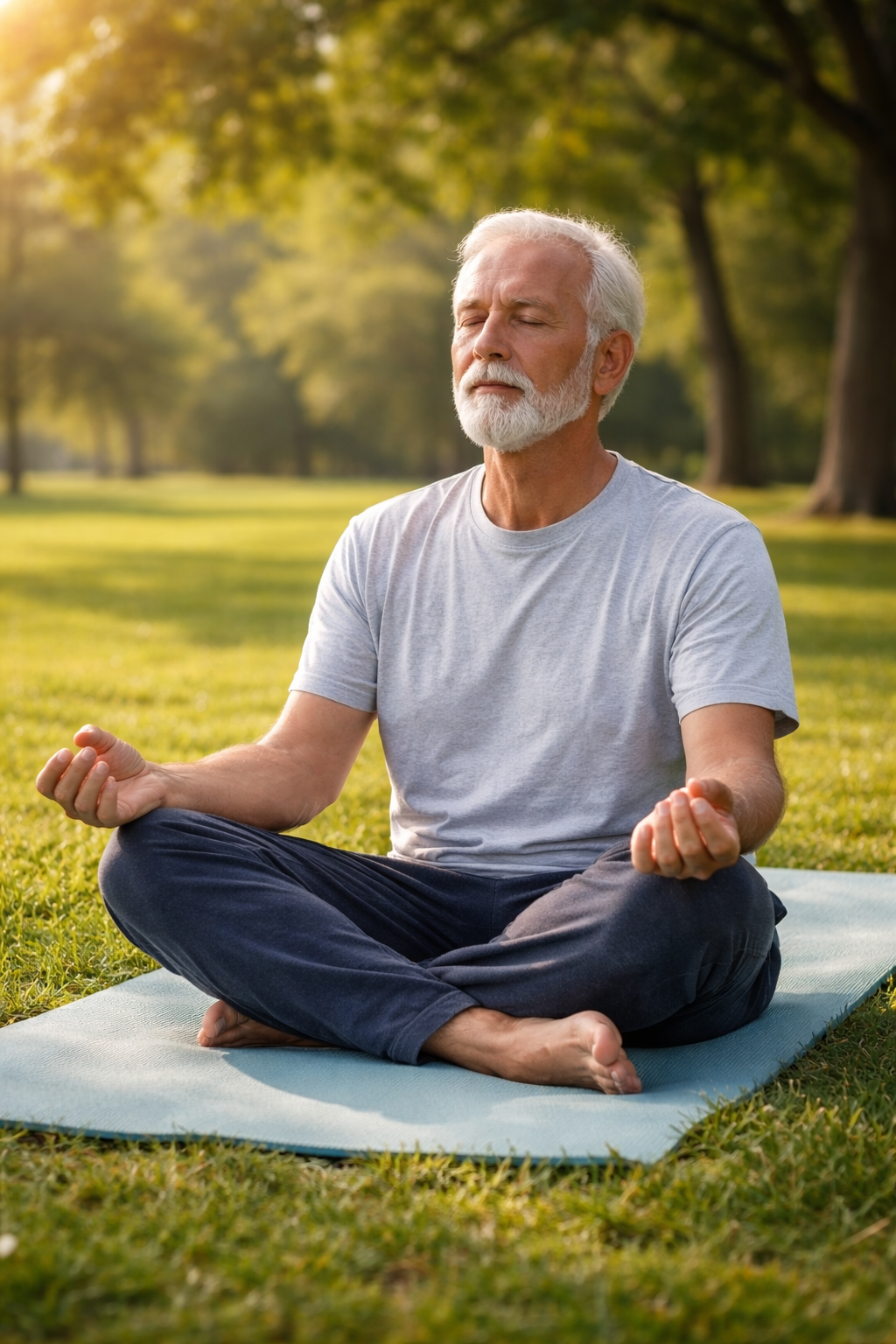
Tool #3: Mindfulness Without the Pressure to Be “Zen”
Mindfulness isn’t about emptying your mind. That expectation alone creates frustration.
In practice, mindfulness is simply noticing what’s happening—without immediately reacting to it.
A realistic way to start
Instead of long meditation sessions, try this:
- 2 minutes noticing your breath
- 1 minute noticing physical sensations
- 1 minute noticing sounds around you
That’s enough.
Studies indicate that short, consistent mindfulness practices can significantly reduce anxiety, especially when they feel manageable instead of forced.
Tool #4: Writing to Clear Mental Noise
Anxiety thrives on repetition. The same worries loop again and again, especially late at night.
Writing interrupts that loop.
Why journaling helps
- It moves worries out of your head and onto paper
- It creates emotional distance
- It often reveals what’s actually controllable
A simple nightly question
“What’s worrying me right now—and what can I realistically influence?”
No grammar. No structure. Just honesty.
Nutrition That Supports a Calmer Nervous System
Food won’t eliminate anxiety, but it can either support or strain your nervous system.
Key nutrients linked to anxiety regulation
Magnesium
Magnesium plays a role in muscle relaxation and nervous system balance. Many stressed adults fall short.
Food sources
- Spinach, almonds, pumpkin seeds
- Whole grains
- Dark chocolate (moderate amounts)
Common mistake: Relying only on supplements instead of food.
Omega-3 Fatty Acids
Omega-3s support brain health and mood regulation. Studies suggest they may help lower anxiety levels over time.
Food sources
- Fatty fish like salmon and sardines
- Flaxseeds and walnuts
B Vitamins
B vitamins help support energy, focus, and neurotransmitter function.
Food sources
- Eggs, dairy, legumes
- Whole grains, leafy greens
How to eat in a way that supports calm
- Avoid skipping meals
- Pair protein with fiber
- Be cautious with caffeine, especially on an empty stomach
Even mild dehydration can raise stress hormones, so regular water intake matters more than most people realize.
Tool #5: Treating Sleep as a Foundation
Anxiety and poor sleep feed each other. One worsens the other.
Small habits that help
- Consistent sleep and wake times
- Dimming lights in the evening
- Avoiding screens for the last hour before bed
Experts agree that regular sleep patterns matter more than perfect sleep duration.
Tool #6: Reducing Daily Mental Overload
The modern nervous system rarely gets a break.
Constant news, endless scrolling, and nonstop notifications keep the brain in a low-grade alert state.
A gentle reset
- No phone for the first 30 minutes after waking
- One intentional time to check news
- Turn off non-essential notifications
This isn’t about disconnecting from life—it’s about giving your nervous system room to breathe.
Common Anxiety Myths Worth Letting Go Of
Myth 1: Anxiety means you’re weak
Anxiety is a biological response, not a personality flaw.
Myth 2: You should aim to eliminate anxiety completely
Some anxiety is part of being human. Regulation matters more than removal.
Myth 3: Medication is the only solution
Many people see meaningful improvement through lifestyle changes, therapy, or a thoughtful combination of approaches.
Myth 4: If a tool hasn’t worked yet, it never will
Consistency matters more than immediate results.
Who Should Take Extra Care
If anxiety is:
- Disrupting daily life
- Causing panic attacks or chronic insomnia
- Paired with depression or substance use
It’s wise to seek professional guidance. These tools are supportive, not a substitute for personalized care.
A More Realistic Way to Think About Anxiety
Anxiety doesn’t fade because you “fix” yourself. It softens when your body repeatedly learns that it’s safe.
That learning happens through small actions:
- A few minutes of breathing
- Gentle movement
- Regular meals
- Better sleep rhythms
Some days will feel easier than others. Progress won’t be linear—and that’s normal.
The real change comes from consistency, not intensity.
Start with one tool. Practice it daily. Let your nervous system catch up.
Managing anxiety isn’t about becoming fearless. It’s about becoming steadier—and that’s a goal worth working toward.