One Meal a Day: Is It Actually Safe — or Just Another Health Trend We’re Chasing?

Most people don’t start eating one meal a day because of science.
They start because life gets busy.
A missed breakfast turns into a skipped lunch. Meetings stretch longer than expected. By the time evening arrives, hunger hits hard—and dinner becomes the only real meal of the day. At some point, a thought quietly appears: “What if I just… ate once?”
That’s how many people stumble into the idea of eating one meal a day. Not through a bold health decision, but through routine, exhaustion, and curiosity. And once you notice weight dropping or your schedule feeling simpler, it’s natural to wonder—is this actually okay?
Let’s slow the conversation down and look at the full picture, without hype or fear.
What Eating One Meal a Day Really Looks Like in Real Life
Eating one meal a day—often called OMAD—is a form of intermittent fasting where you consume all your calories in a short window, usually at night, and fast for the remaining hours.
On paper, it sounds disciplined.
In reality, it often happens unintentionally.
People don’t wake up planning to fast for 23 hours. It’s usually work pressure, long commutes, deadlines, or the quiet belief that skipping meals is somehow “productive.” Over time, that pattern turns into a routine.
The question isn’t whether OMAD exists—it clearly does.
The question is whether it supports your body long-term.
Why the Idea Is So Appealing Right Now
Modern life rewards efficiency. We’re encouraged to optimize everything—sleep, steps, calories, productivity.
One meal a day fits neatly into that mindset because it:
- Removes constant food decisions
- Feels controlled and minimalist
- Frees up mental space during the day
For people overwhelmed by diet rules, OMAD can feel like relief. One plate. One moment. Done.
And yes, for some, the scale moves quickly at first. That early feedback can be motivating—but it’s not the whole story.
What Happens Inside the Body When You Eat Once a Day
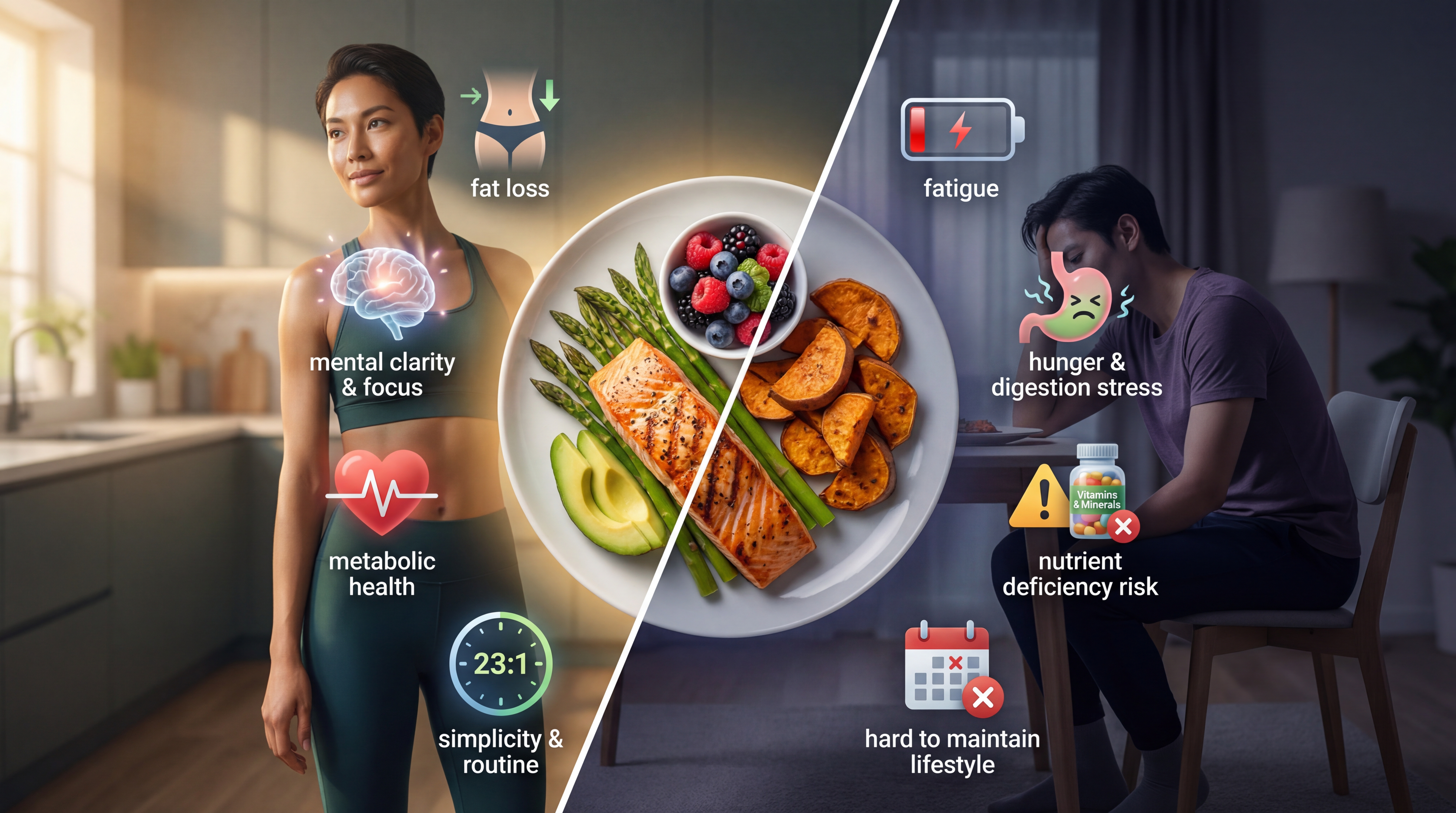
When you fast for long hours, your body adapts. Insulin levels stay lower, fat stores become more accessible, and digestion gets a break. Research suggests that fasting periods can improve insulin sensitivity and metabolic flexibility.
But here’s the part that often gets lost online:
Most of these benefits are observed with moderate time-restricted eating, not extreme patterns done indefinitely.
The body is adaptable—but it’s also protective. Prolonged restriction can eventually signal stress rather than balance.
The Real Benefits of One Meal a Day
When OMAD works, it usually works for clear, specific reasons.
Simplicity
There’s comfort in structure. One meal means fewer decisions, less grazing, and more awareness around food.
Natural Calorie Reduction
Without counting anything, many people simply eat less overall. For those coming from constant snacking, this can create a short-term calorie deficit.
Mental Focus (for Some)
Some people feel lighter and more focused during fasting hours, especially if they previously struggled with blood sugar crashes.
These benefits are real—but they’re also conditional.

The Downsides People Don’t Notice Right Away
This is where lived experience matters more than trends.
Nutrition Becomes a Tight Squeeze
Getting enough protein, fiber, vitamins, and minerals in one sitting is harder than it sounds. Over time, small gaps add up.
Low iron. Low calcium. Low magnesium.
Energy dips often show up before blood tests do.
Muscle Loss Can Sneak In
If protein intake is too low or workouts are intense, the body may break down muscle—especially in adults trying to stay lean and strong.
Hormonal Stress Is Real
Long fasting windows can raise stress hormones in some people. Women, in particular, may notice changes in sleep, mood, or cycles before connecting the dots.
The “One Big Meal” Trap
After hours of restriction, it’s easy to eat quickly, heavily, and without balance—leading to bloating, fatigue, or blood sugar spikes that undo the day’s calm.
Why Food Quality Matters More Than the Clock
If someone chooses to eat one meal a day, that meal has to work hard.
A solid OMAD plate should include:
- A generous portion of protein (eggs, fish, chicken, lentils, tofu)
- Slow-digesting carbohydrates (whole grains, millets, root vegetables)
- Healthy fats (nuts, seeds, olive oil)
- Plenty of vegetables for fiber and micronutrients
The most common mistake?
Treating that meal like a reward instead of nourishment.
Who Might Actually Do Fine on One Meal a Day
OMAD can sometimes suit:
- Sedentary adults reducing overeating
- People experimenting short-term under guidance
- Those who genuinely prefer fewer meals and eat well
Even then, it tends to work best as a phase, not a permanent identity.
Who Should Think Twice
One meal a day is not ideal if you:
- Are pregnant or breastfeeding
- Have blood sugar issues
- Train hard or lift heavy
- Have a history of disordered eating
- Feel constantly cold, tired, or mentally foggy
In these cases, the body often needs more rhythm, not more restriction.
Clearing Up a Few Common Myths
“If I’m hungry, I’m burning fat.”
Hunger is just a signal. It doesn’t automatically mean metabolic benefit.
“More fasting means better health.”
At some point, stress outweighs adaptation.
“OMAD is the fastest way to lose fat.”
Fast results don’t always mean lasting ones.
A More Sustainable Middle Ground
For many people, a 12–16 hour fasting window with two or three balanced meals delivers similar benefits—without the strain.
It supports:
- Better nutrient intake
- Muscle maintenance
- Hormonal balance
- Long-term consistency
And consistency, more than intensity, is what actually protects health.
The Honest Takeaway
Eating one meal a day isn’t inherently dangerous.
But it isn’t automatically healthy either.
For some, it’s a temporary tool. For others, it becomes a quiet source of stress disguised as discipline.
The goal isn’t to eat less often—it’s to eat in a way that supports your energy, strength, and life outside the plate.
Health doesn’t come from extremes.
It comes from patterns you can live with—calmly, consistently, and without fighting your body every day.